
If your surname differs between passport and diploma, simply deciding to “make them identical in German” is not the answer. The cause may be transliteration, a formal name change or a document error. Each requires different explanations and evidence.
The aim is to show clearly that the documents belong to the same person, not make them artificially identical. These steps help prepare for a visa or qualification procedure. The receiving authority decides which evidence is sufficient; this article does not replace an individual legal determination.
First record the exact differences
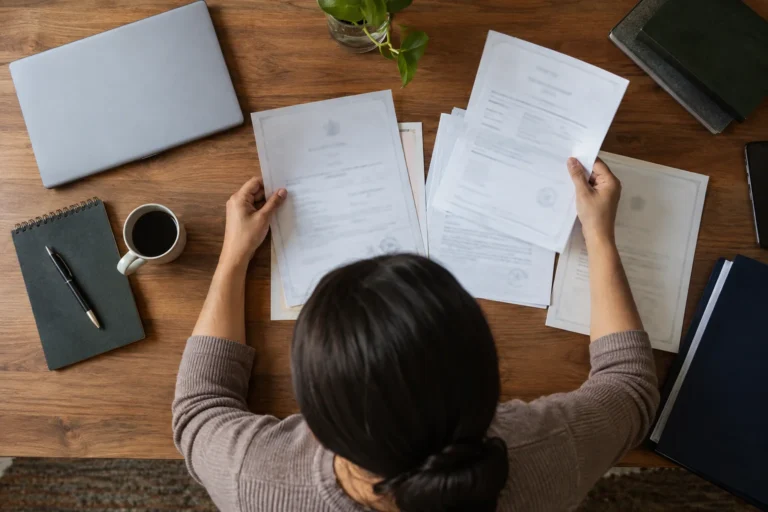
Compare your passport, diploma, attachment and any birth or name-change documents side by side. Check first name, surname, patronymic and date of birth separately. Do not focus only on the surname: first-name and surname fields may have been reversed.
Record each spelling exactly as it appears. Do not yet replace it with the supposedly correct form. Identify where the difference began, how the old passport spelled the name and whether a formal change occurred.
Even one letter may need explaining, but not every difference means automatic rejection. Correctly identifying the issue is more useful than jumping to conclusions. Altering the original yourself creates another problem.
Distinguish three situations
| Situation | What happened? | What to check |
|---|---|---|
| Transliteration | The same name appears in different writing systems | Original spelling and explanation |
| Formal change | A name changed through marriage or another formal reason | A document linking the old and new names |
| Clerical error | An incorrect letter or detail was entered | Correction by the issuing authority |
This classification is a guide, not a diagnosis. Several causes can overlap: a surname changed first, then a new passport used another transliteration. In that case, show the full sequence.
If you do not know the cause, ask the issuing organisation. A translator’s or agent’s guess does not replace the official history. Ask “How do we lawfully explain this difference?” rather than “How do we make everything identical?”
How do you document a formal name change?
The official guide to professional recognition documents notes that a name change may require evidence such as a marriage certificate. Check the precise translation, copy and other certification requirements for your procedure.
Check that the document actually links the old and current names. Are dates and details consistent? If several changes occurred, does the latest certificate explain the entire chain? Ask the receiving authority a precise question about any missing link.
Do not circulate unnecessary personal details. Send the required evidence through the requested channel and only to the necessary extent. Even if a family document is needed, do not automatically send it to every employer with the first application.
How do you handle transliteration differences?
Preserve the original spelling and show the translator the form in your valid passport. Their role is to produce a faithful, understandable translation, not hide the difference. Clarify in advance what explanation or evidence the receiving authority expects.
The same sound may have been represented by different Latin letters at different times. But do not dismiss every discrepancy as “just transliteration”. Differences in birth dates, document numbers or other essential details need separate checking.
Enter the requested current details in your CV and forms according to the instructions. Do not ignore a field for former names. Give clear, brief information where needed to avoid concealing the history.
Who corrects an actual document error?
For a clerical error in a diploma, contact the issuing educational institution or competent authority. For a passport error, check the passport authority’s official procedure. Whether a document must be replaced or a certificate issued depends on the individual case.
Do not erase and rewrite letters on a scan, replace numbers or recreate a PDF to look like the original. That interferes with the evidence, rather than merely editing it. Even a genuine correction must follow the official process.
If correction takes time, discuss the application deadline and possible later submission of documents with the receiving authority. Do not assume an extension exists; keep the written reply.
Illustrative example: surname changed after marriage
Suppose a diploma bears a former surname and the valid passport a new one. The applicant considers replacing the old surname with the new one in the translation. This is an illustrative example, not an actual client’s story.
The right step is to preserve the diploma’s original details and establish the evidence required to link the name change. The applicant asks the recipient about copy and translation formats, then prepares a consistent set. A translation must not turn into a purportedly reissued diploma under the new name.
This lets the reviewer see when the qualification was obtained, when the name changed and who the person is now. Artificially identical spelling may conflict with the original.
How do you ask the receiving authority?
Briefly state the application type, affected documents and known reason. For example: “My passport uses this spelling and my diploma another. There was a formal name change. In what form should I submit the document linking them?”
You need not send every confidential record in the first email. Provide the necessary identifier and requested material according to official instructions. Include an existing application reference when relevant, but do not post it on a public forum.
Share the relevant parts of the reply with the translator and adviser so everyone follows the same requirement. Avoid creating conflicting versions by switching between different verbal suggestions.
Final check
Before submitting, compare the current passport, original diploma, translation and linking record again. Is the difference explained, the source text visible and the chronology consistent? Name final files clearly and record the version submitted.
For the general document file, use the visa document guide. Name differences are individual matters, so additional evidence beyond a general checklist may be needed. Obtain the answer from the relevant authority.
Frequently asked questions
Must I replace my diploma because of one letter?
There is no universal rule. First identify the cause and the recipient’s requirements. Transliteration and a clerical error are different issues. Do not start replacing documents based on a guess.
Why can’t the translator simply match everything to the passport?
The original details must not be concealed. A translation should accurately reflect the document’s spelling and any necessary explanation. Check the accepted form against the relevant requirements.
Is a copy of the old passport enough?
It can be useful evidence, but is not necessarily sufficient in every case. Ask the receiving authority which documents establish the sequence. An available copy does not replace official requirements.
Should I explain the difference in my CV?
Do not overload your CV with personal details. A brief explanation may nevertheless help connect the submitted documents. Answer form questions about former names and other details accurately.