


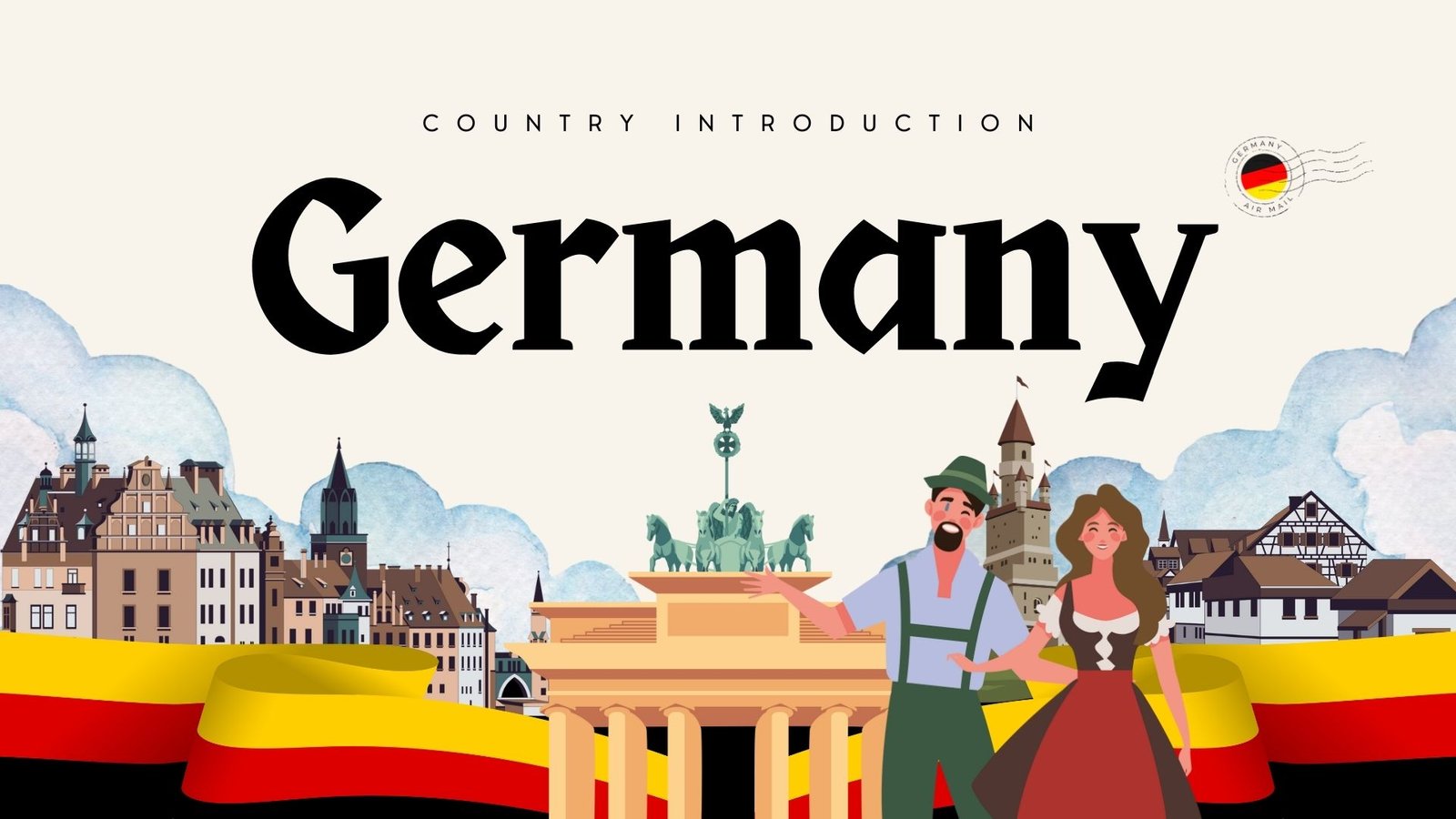
Germany is in Central Europe and is known for its historical heritage, culture, technology and industry. It is an important geographical, cultural and economic centre. This overview introduces the country’s history, economy, natural landscapes and everyday traditions.
Contents
Geographical location
Germany lies in Central Europe and borders nine countries. The Bavarian Alps are in the south; plains and the Baltic and North Sea coasts are in the north. The Black Forest, Rhine and Danube are notable natural features. Diverse landscapes and regional climate differences appeal to travellers and nature lovers: coastal areas and mountain regions offer very different settings.
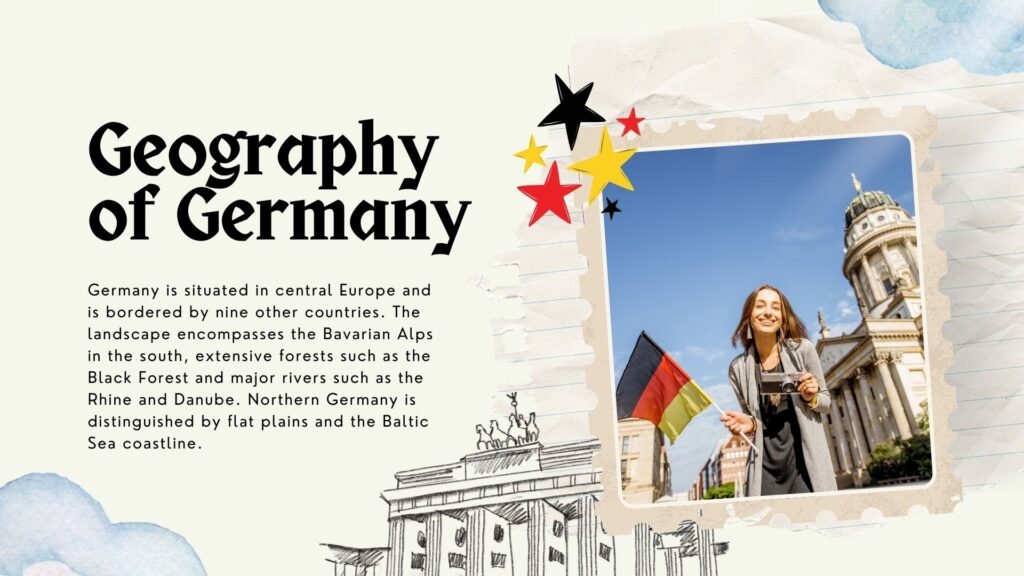
From northern coastal plains to high mountains in the south, each region has its own natural character. Towns and cities on the Baltic and North Seas are also important for tourism and trade.
History
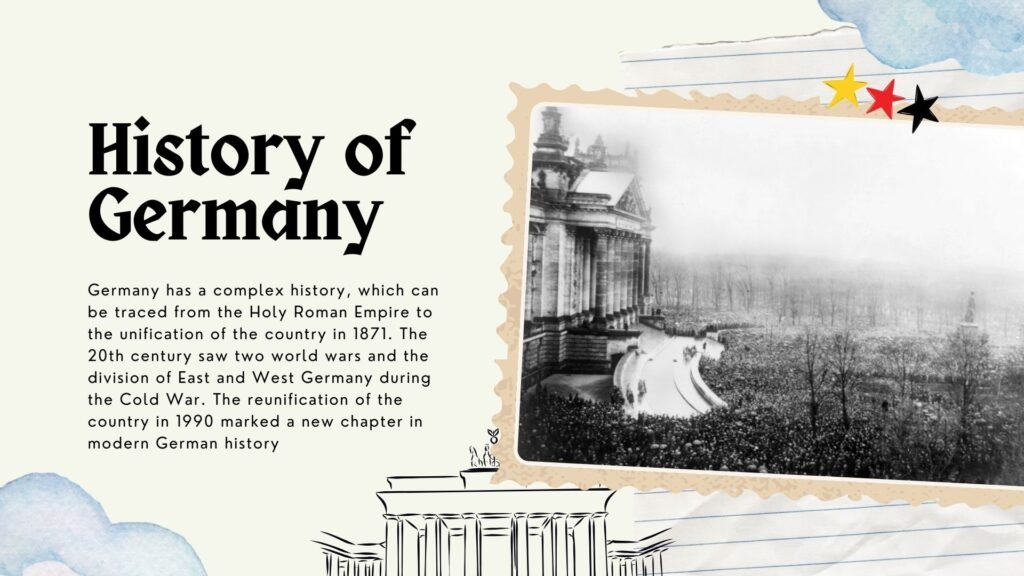
Germany’s history is complex. In antiquity, parts of present-day Germany belonged to the Roman Empire; many separate states existed in later centuries. The German Empire was established in 1871. The twentieth century brought two world wars, the Nazi dictatorship and its crimes, post-war division into West and East Germany, and reunification in 1990. These events are central to understanding modern Germany and its culture of remembrance.
German-speaking regions contributed to science and the arts during the Renaissance and Enlightenment. Gutenberg’s printing technology and Luther’s Reformation profoundly influenced European cultural life. Cultural, scientific and economic changes have been closely connected throughout the country’s history.
Economy
Germany is a major industrial economy. Automotive manufacturing, mechanical engineering and chemicals play important roles. Volkswagen, BMW and Siemens are well known internationally. Renewable energy, research and technology also matter. Agricultural crops include wheat, barley and potatoes. The country’s international role rests on both large companies and specialised medium-sized businesses.
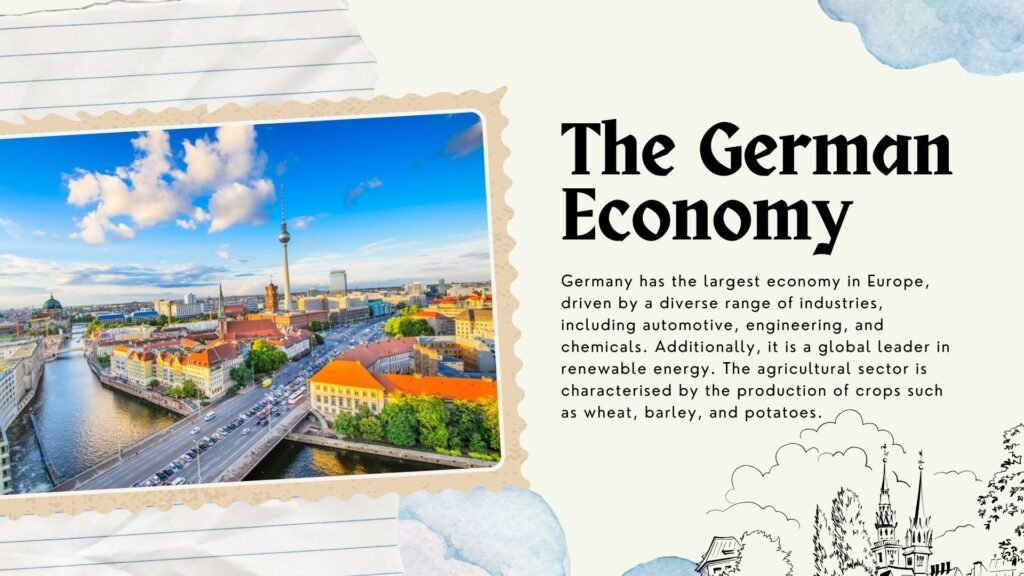
Exports are important: Germany produces industrial machinery, medical equipment and other technology products. Education and research support business development. The trade balance and government budget are different measures, however; their position changes over time and should be checked against current data.
Tourism
Germany attracts visitors from around the world. Berlin, Munich and Hamburg combine historic sights with modern urban life. Castles, forests and transport infrastructure support many kinds of trip. Well-known places and events include Neuschwanstein Castle, the Black Forest and Munich’s Oktoberfest. Music events, festivals and cultural exhibitions take place throughout the year.
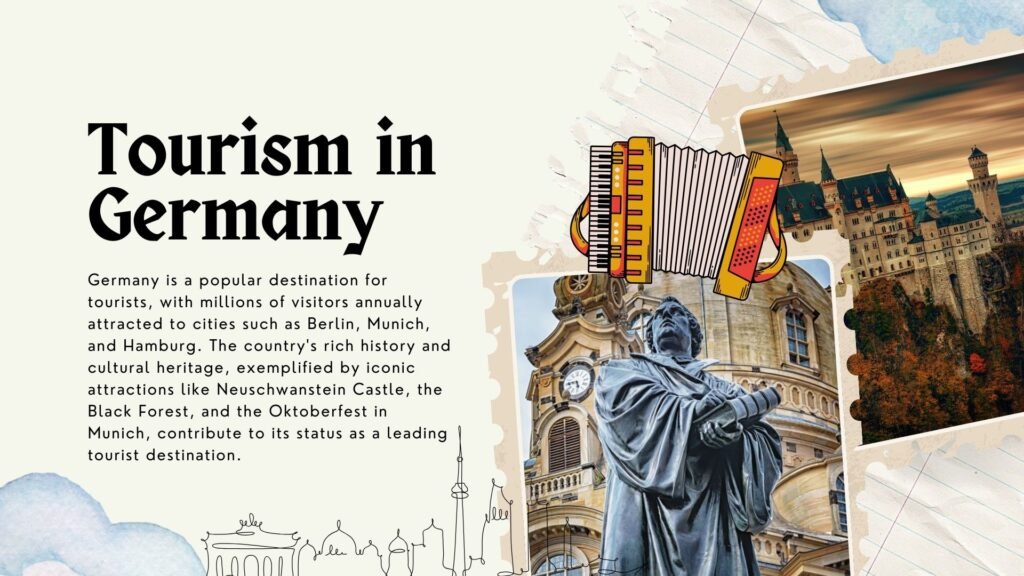
The country is also known for wine regions, including the Rhine and Moselle valleys. Vineyards and river landscapes appeal to visitors interested in both nature and local food.
Festivals and traditions
Oktoberfest is among Germany’s well-known celebrations. Christmas markets and carnival traditions are also prominent. Each region has its own customs; carnival, for example, features costumes, parades and entertainment. These events bring local communities together and attract visitors.
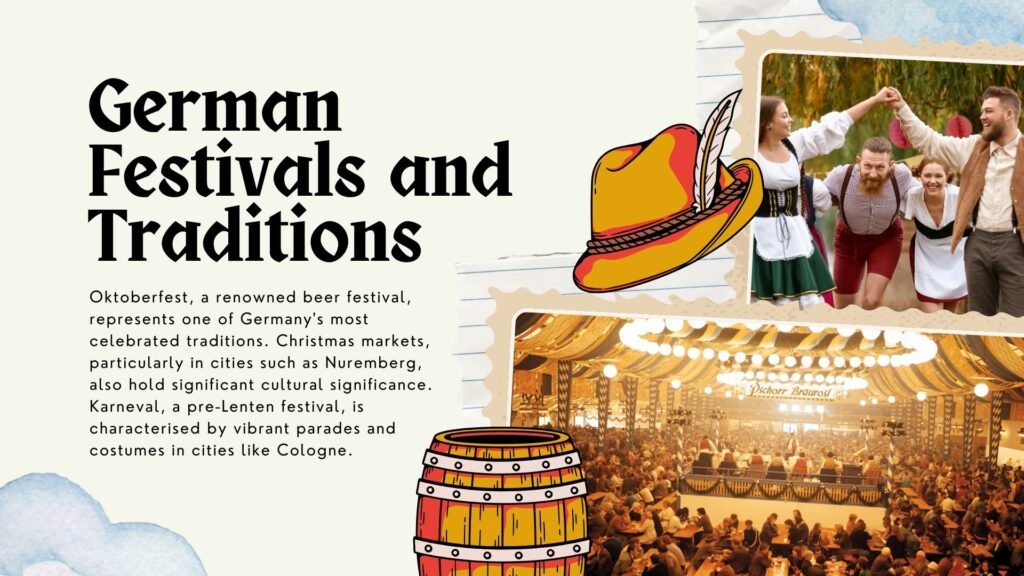
Music and arts festivals enrich cultural life. Well-known examples include the Bayreuth Festival and the Berlin International Film Festival, the Berlinale.
Natural landscapes
Germany offers varied habitats for plants and animals, including red deer, wild boar and lynx. National parks and protected areas help conserve ecosystems. From the Alps to the northern plains, varied landscapes offer opportunities for observing nature and walking while respecting local conservation rules.
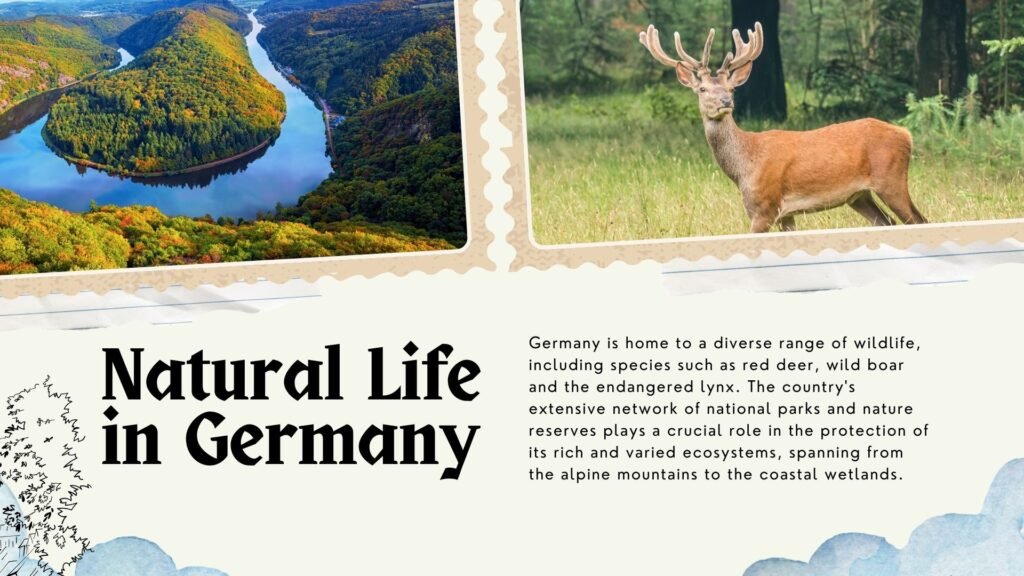
Rivers and lakes offer leisure and water activities where permitted. The Black Forest and Berchtesgaden national parks introduce forest and Alpine landscapes. Visiting conditions depend on the season and the particular area.
Culture and cuisine
German culture spans classical music, contemporary art, architecture and regional cuisine. Familiar foods include sausages, pretzels and schnitzel. Brewing has a long history, associated with the term Reinheitsgebot. Ludwig van Beethoven and Johann Sebastian Bach are renowned figures in the musical heritage, alongside a continuing contemporary arts and architecture scene.
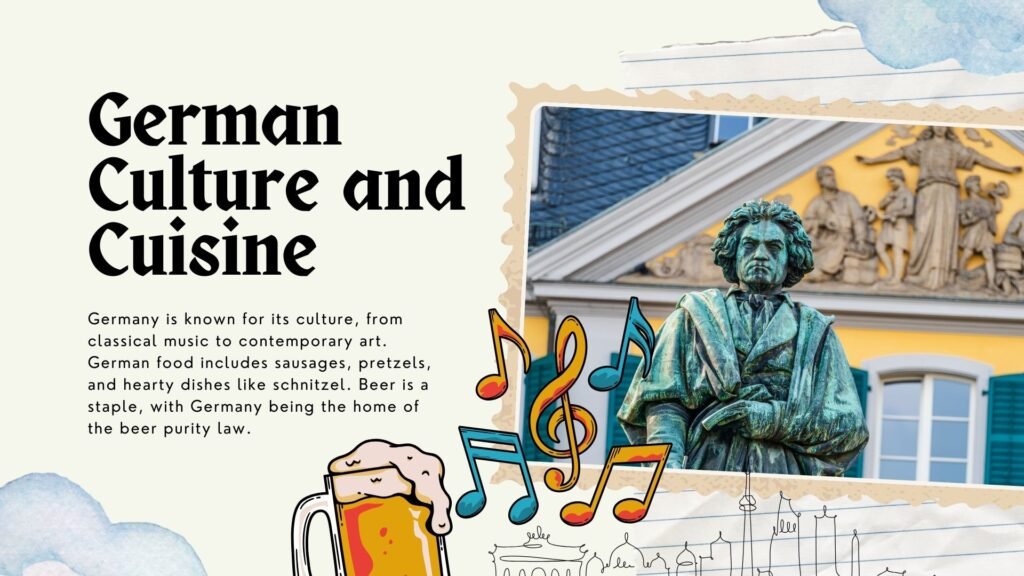
Regional variety is especially visible in food. Fish dishes are common in the north, while southern regions have local baked goods, dumplings and hearty dishes. Breweries and chocolate production are also familiar parts of the country’s food culture.
Sport
Football has a prominent place in German sport. The men’s national team won the World Cup in 1954, 1974, 1990 and 2014. Handball, basketball and ice hockey are also popular. Professional clubs, stadiums and local sports associations form an extensive sporting environment. Munich, Frankfurt, Berlin and other cities host competitions at different levels.
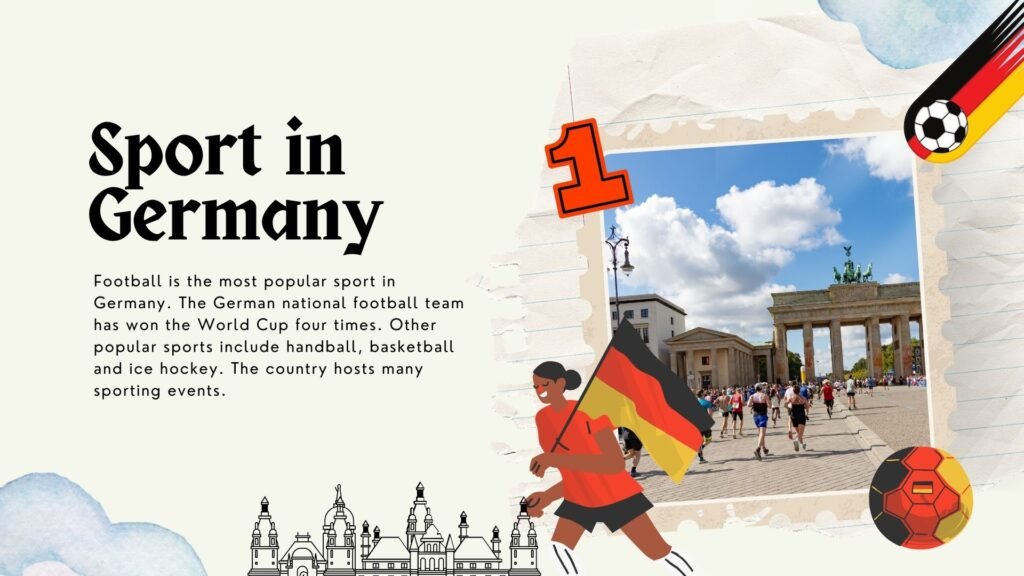
German athletes compete across many Olympic disciplines. Sports clubs, schools and youth programmes help new generations take part in both competitive sport and everyday physical activity.
